
How to Create a Luxury Product Video Ad From One Image
Create a luxury AI product video ad from one image using a tested anchor, shot sequence, and prompt that protects product shape, materials, and brand memory.
Luxury Product Video Ad — Final Edited Showcase
Final edited showcase · 9 sec · Silent edited showcase. The article separates generation decisions from post-production pacing.
- 0:00Cap macro and product-detail hook
- 0:02Silk reveal and material proof
- 0:04Water impact and human-use sequence
- 0:07Atmosphere resolves into the hero packshot
We started this experiment with one fictional perfume bottle and one practical question: could a 15-second generation do more than display an attractive object? The bottle had to remain recognizable, but the shots also had to create curiosity, make the materials feel expensive, show the product in use, and leave a clean final image.
That is a lot to ask from one reference. We submitted the anchor image and the Seedance 2.0 video generation once, with no generation retry. The source was later shortened into the showcase shown above. This article covers what went into the image and video generation. The speed of the final edit came later.
What the ad needed to prove
A visual-only version of the idea would be mostly dramatic lighting, glass, silk, water, smoke, and a fashion model. It could produce a handsome montage without explaining why one shot should follow another.
We gave the sequence four jobs. The opening macro interrupts attention before the full bottle appears. The next shots use glass, metal, liquid, and light to make the product feel tangible. A model holding the bottle near her neck supplies scale and a use ritual. The centered packshot at the end is the image we wanted viewers to remember.
Once those jobs were clear, seven beauty shots were no longer interchangeable. A cap macro could open the ad, but it could not finish it. The human-use shot carried desire, yet it was too unstable to serve as the final product proof.
Build the product truth contract
The bottle could survive a change of background and still stop being the same product. A taller cap, a rounder body, a moved label, or a different liquid color would be enough. We therefore wrote down the details that every shot had to retain. This was the product truth contract:
- an obsidian-black rectangular glass body;
- molten-amber light inside the bottle;
- a folded-ribbon brushed-gold cap;
- a blank centered label area;
- a black, crimson, and molten-gold campaign palette.
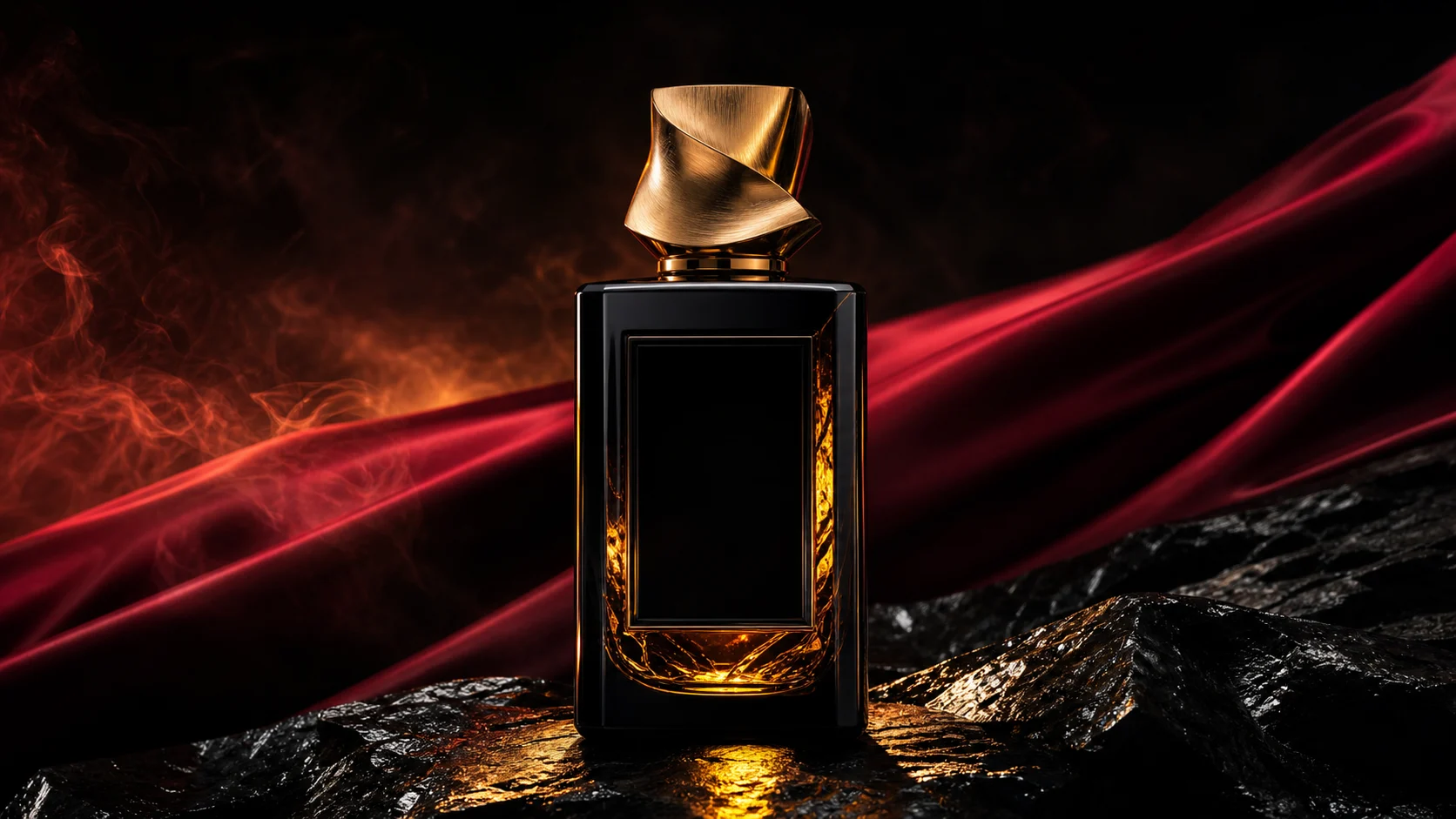
The anchor image prompt was:
Luxury fragrance advertising still of one unbranded obsidian-black glass perfume bottle with a glowing molten-amber core and a distinctive folded-ribbon brushed-gold cap, centered on wet black stone. Crimson silk cuts diagonally behind it, fine smoke and one gold reflection add depth. Aggressive high-fashion lighting, black, crimson and molten gold palette, photoreal materials, crisp silhouette, premium 16:9 hero frame. Blank label area. No words, letters, numbers, logo, watermark, interface, border, hands or duplicate bottles.
We spent more words on the cap than on the room because the cap was the easiest feature to track. The blank label also mattered. Generating decorative lettering at the image stage would have created another unstable detail before the bottle even moved.
The still needed some space around the silhouette. It also needed readable highlights on the black glass. Fabric, smoke, and water could suggest movement, but none of them could hide the bottle's defining edges. If a source image already contains warped type or uncertain geometry, video usually makes the problem harder to ignore.
Order the shots around the marketing argument
The opening withholds the full bottle for a moment. A droplet and a hard gold highlight make the viewer decode the object. The middle brings in silk and water, then the model. Only after that does the sequence remove the action and return to a stable packshot.

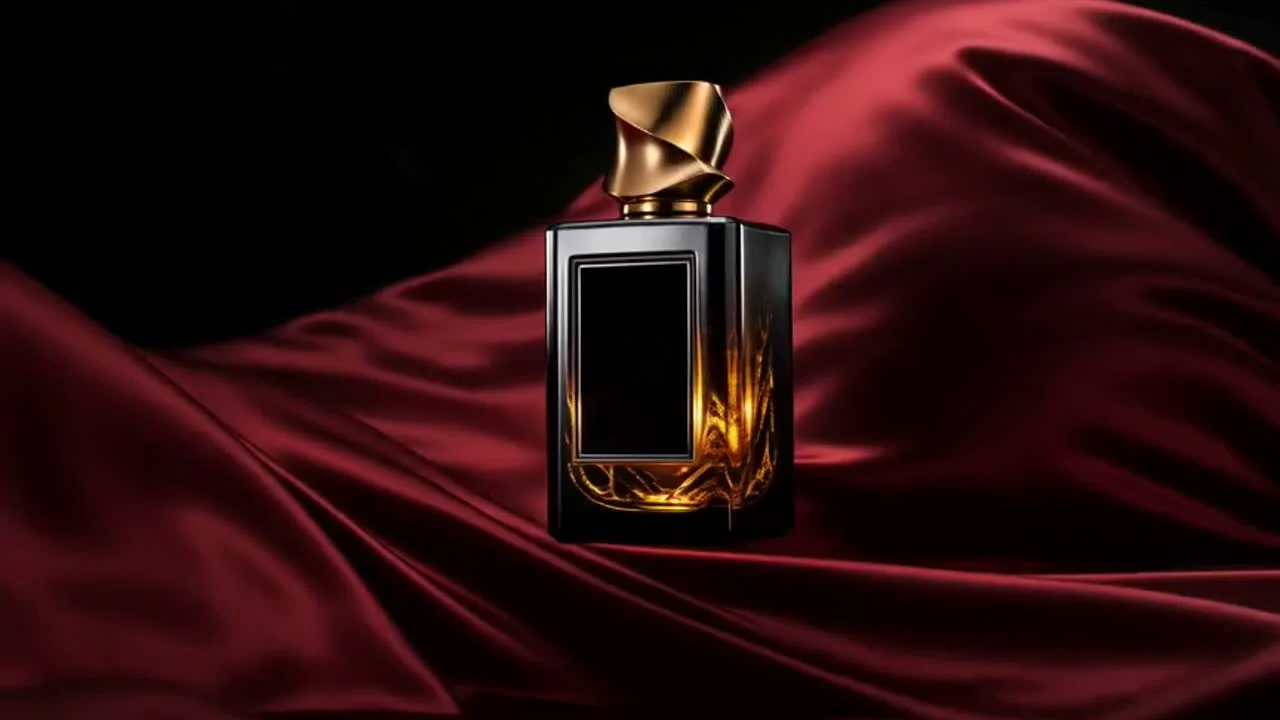
The exact video prompt was:
Use supplied bottle as strict product reference. Create an aggressive 15-second luxury fragrance trailer with seven distinct 1-2 second shots and hard rhythmic cuts, never dissolves. Shot sequence: extreme macro droplet racing across obsidian glass; gold cap snapping through a light sweep; bottle rotating as crimson silk whips across lens; bottle suspended above black water during a sharp splash; elegant model in sculptural white eveningwear raises the exact bottle near her neck in a clean close-up; molten-amber core pulses through smoke; final centered hero packshot. Cut on gold highlights, silk occlusions, splashes and whip-pans. No shot lingers over 1.7 seconds. Preserve bottle geometry, cap, blank label and color in every shot. No text/logos, extra bottles, warped hands, mutated cap, flicker or slow random camera moves.
The source used Seedance 2.0 in 16:9 at 480p for 15 seconds. Audio was disabled so we could judge the visual generation on its own.
Use transition materials that belong to the product
Silk, smoke, water, and gold light can all become generic luxury decoration. We kept them because each one carried part of the fragrance argument. Silk brought softness and skin into the frame. Smoke gave an invisible scent something visible to do. Water made the bottle feel physical rather than weightless. The moving gold highlight connected the cap with the amber core.
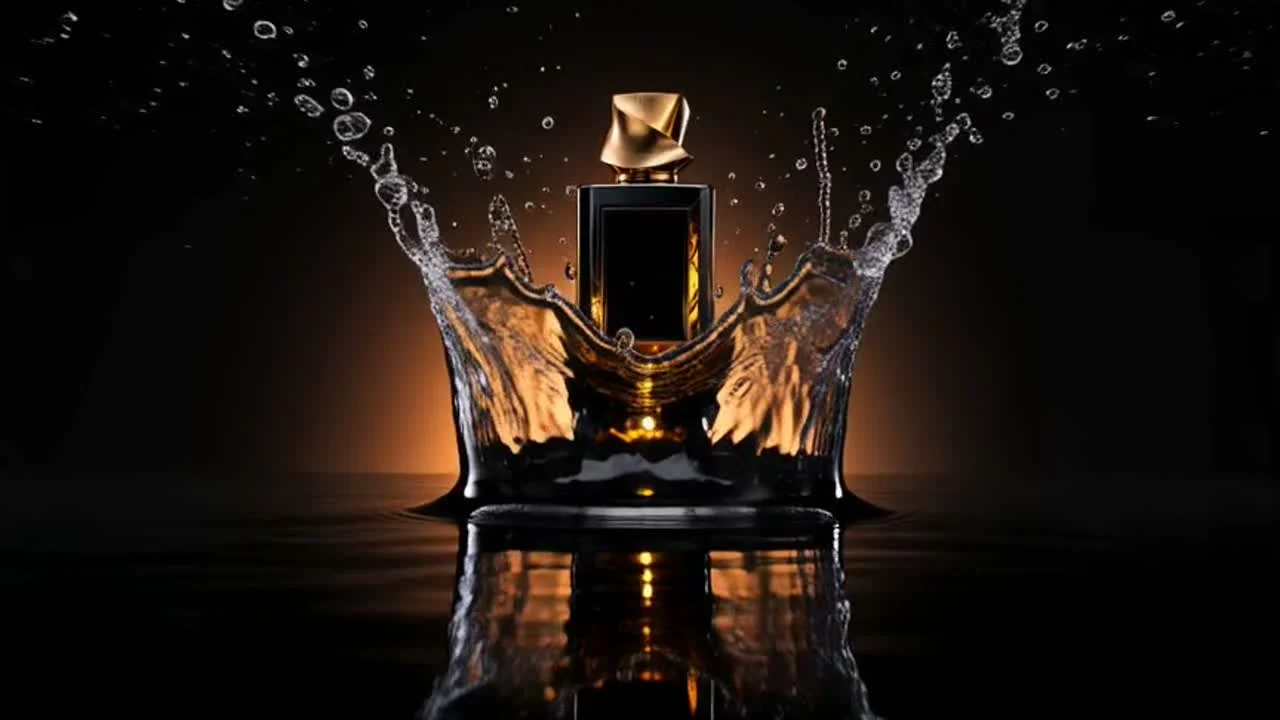
A quick way to test an effect is to imagine it on an unrelated product. If the same transition could be copied unchanged onto a laptop, lipstick, coffee machine, and sports shoe, it may be decorating the shot rather than explaining this product.
The model shot had a different purpose. It turned the bottle into something held and used.
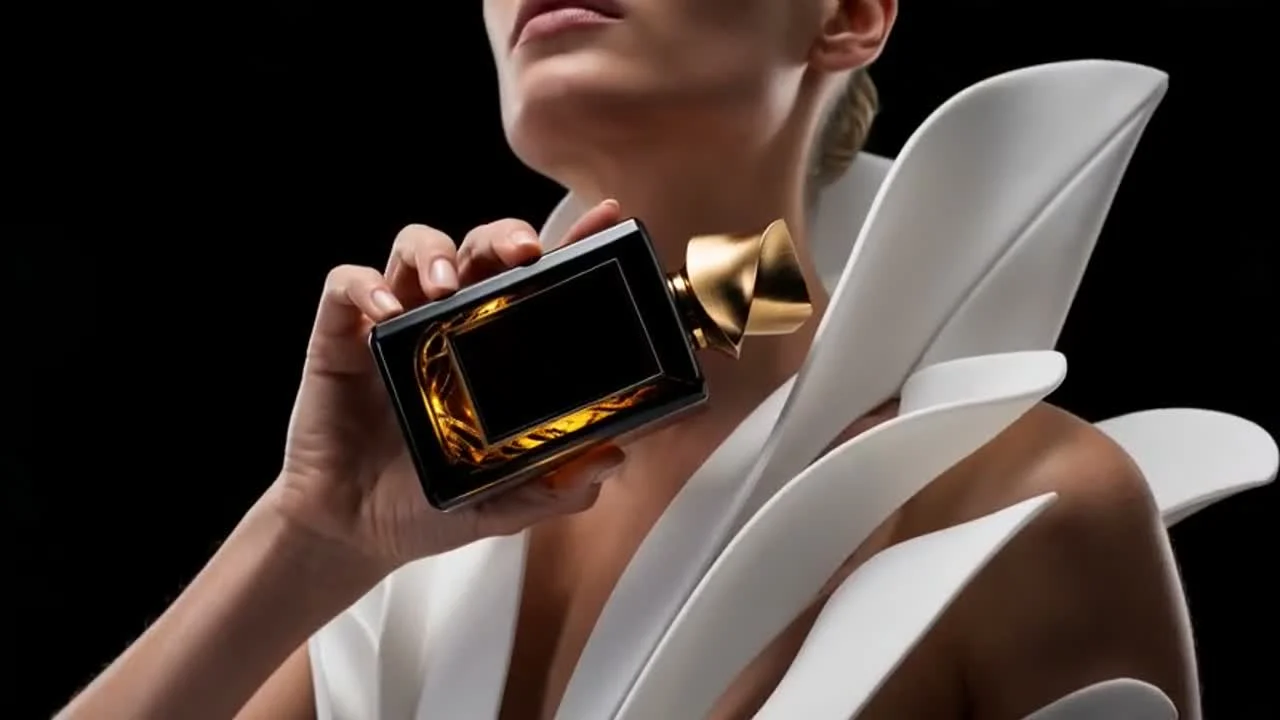
We chose sculptural white eveningwear because it separated the model from the black bottle and the crimson fabric. This was also the riskiest shot. Hands could deform, the bottle could rotate, and the cap could change while the model still looked convincing. When exact product fidelity carries legal or commercial weight, separate human and product plates are safer than accepting a nearly correct interaction.
Where the generated source drifted
The source produced the intended order of detail, reveal, impact, human use, atmosphere, and packshot. The campaign colors held together, and the folded cap remained recognizable through most scenes.
The errors were easier to see in a dense review than at playback speed. The bottle turned horizontally during the human-use shot. A few macro frames enlarged the cap until the body disappeared. Scale and orientation were weaker than color and silhouette.
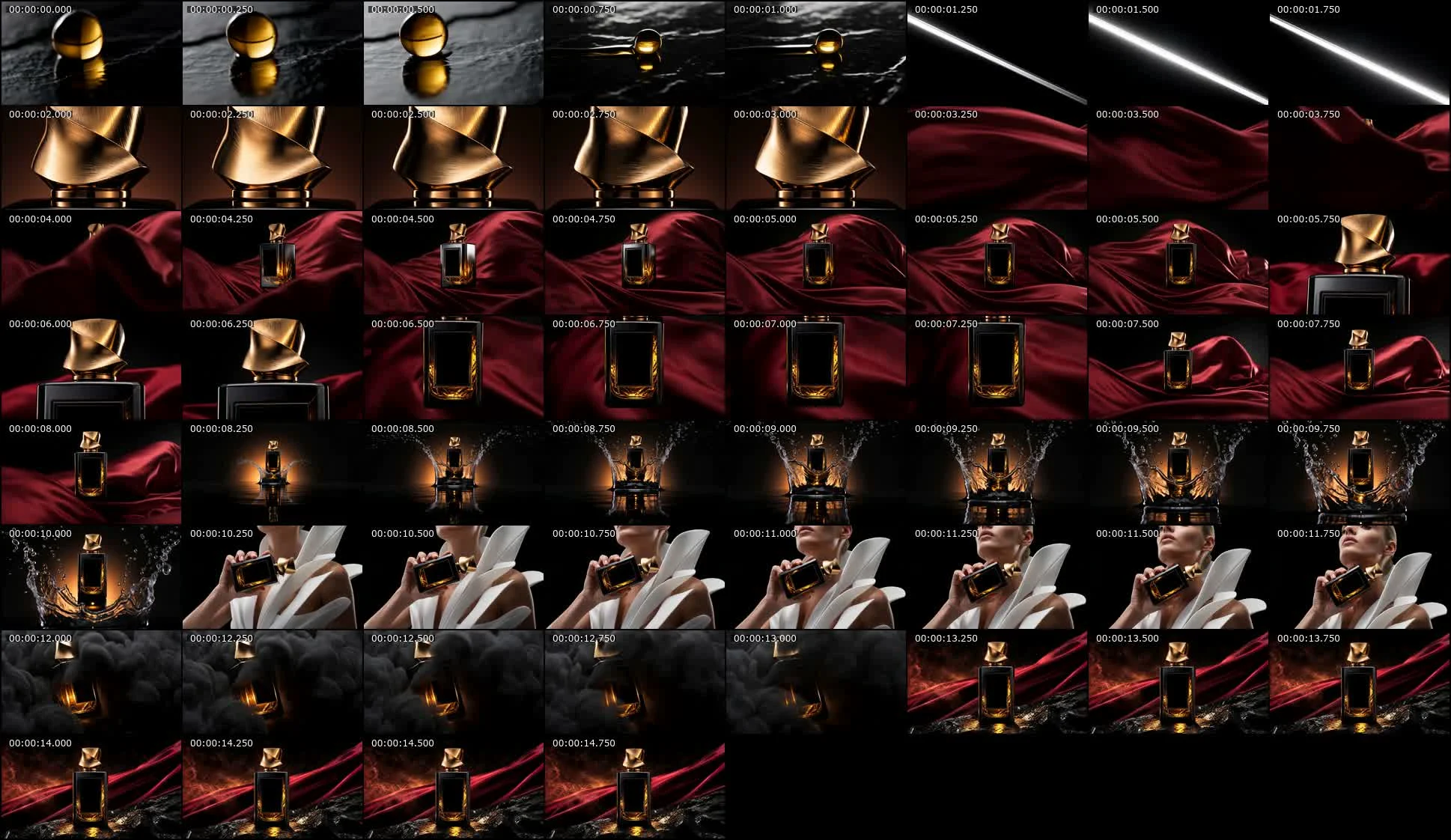
We reviewed the source by asking whether the silhouette, cap, material colors, and blank label area still matched the anchor. We also checked for duplicate products, covered details, and whether the last usable frame still worked as a packshot. The prettiest frame was not always the frame that sold the product most clearly.
This is the same prioritization problem we found in the character consistency stress test. A model handles a short list of visible locks better than an instruction that treats every detail as equally important.
Reuse the contract on another product
The contract can be adapted without copying the perfume aesthetic:
Use the supplied [product] as a strict product reference. Preserve [shape], [distinctive component], [label area], [material], and [brand colors] in every shot. Create a [duration] commercial with short shots for an attention detail, material proof, a dynamic reveal, physical interaction, human use, and a final hero packshot. Use [transition materials that express the product] as occlusions and transitions. Keep the campaign lighting and palette coherent. Do not create extra products, altered geometry, unreadable text, warped hands, unrelated scenery, slow random camera movement, or a final frame that hides the product.
Every bracket should become something visible. "Premium" cannot be checked in a frame. "Brushed gold with one sharp moving highlight" can.
For skincare, the useful materials may be water, foam, oil, or translucent gel. A watch might rely on brushed metal, mechanical movement, and controlled reflections. Those choices should come from the product rather than from a reusable list of cinematic effects.
Where this workflow stops being reliable
This reference-first approach suits perfume, skincare, jewelry, watches, drinks, and fashion accessories because silhouette and material carry much of the identity. It is less reliable for products with dense packaging text, exact screen UI, many small controls, medical details, or regulatory labels.
If the reference is simple enough to survive motion, open Motiofy's image-to-video generator and write the product truth contract before adding camera moves. If exact labels or controls are the main selling point, plan for compositing and verify those details outside the generated video.