
How to Animate a Painting Through Five Material States
Learn how to animate a painting with AI through ink, origami, chrome, glass, and living light using a tested material-ladder prompt and real output frames.
Painting Material Transformation — Final Edited Showcase
Final edited showcase · 8 sec · Silent edited showcase. The article separates generation decisions from post-production pacing.
- 0:00Ink koi holds the original silhouette
- 0:02Paper and folded material states take over
- 0:04Reflective glass gives way to living light
- 0:07The moving subject returns to paper
The hardest part of this experiment came at the end. Our koi left a sheet of handmade paper, passed through origami, chrome, glass, and a luminous living state, then had to become a flat ink painting again. The departure was convincing. The return only recovered the idea of the opening image, not its exact composition.
That failure tells us more than a clean loop would have. It shows what happens when a model must remember a simple first frame after the camera, lighting, scale, environment, and apparent anatomy have all changed.
Experiment card
- Input: one 16:9 ink-koi image
- Video model: Seedance 2.0
- Source duration: 15 seconds
- Generation attempts: one
- Audio: disabled
- Main constraint: one koi, one trajectory, one readable silhouette
- Article scope: generation only; a later showcase edit is not treated as one-shot model output
The difficult part was returning to paper
The 15-second source begins with black ink on ivory paper. The painted fish tears free, changes construction several times, swims through a cosmic environment, and strikes the paper at the end. We wanted the last impact to close the visual idea without pretending that the first and last frames would match pixel for pixel.
The source did return to one ink fish on paper. It did not recover the original camera angle and placement closely enough for an invisible loop. We would describe it as a semantic return, not a seamless loop.
Choose a subject that can survive material change
A koi gave us a curved body, an obvious head-to-tail direction, and broad fins that remain legible in both flat and volumetric forms. It also belongs naturally to ink painting and water, so neither the opening nor the living state needed much explanation.
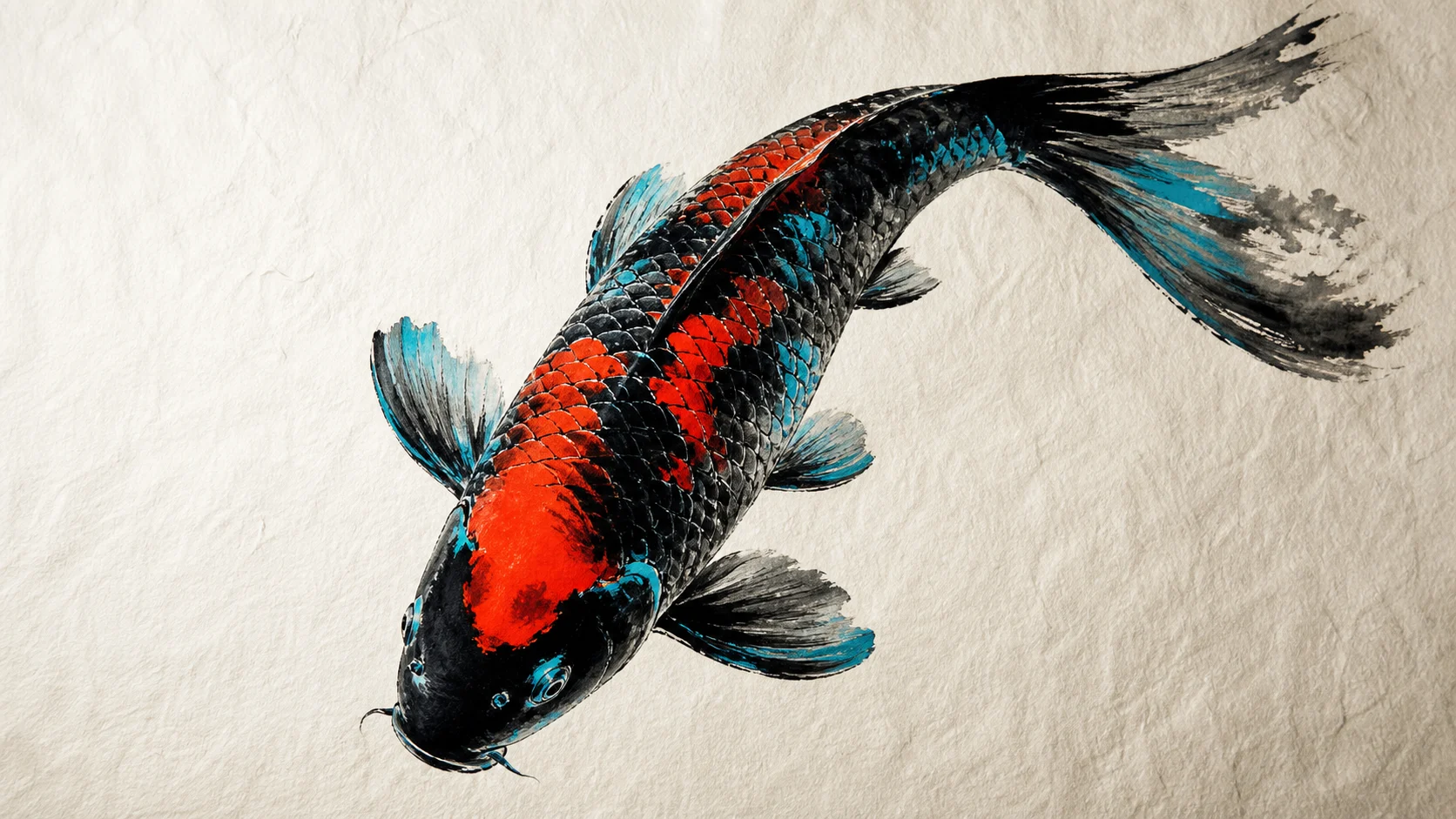
The anchor-image prompt was:
Premium museum-grade still of a single koi painted in saturated black ink with electric-cyan and vermilion accents on textured ivory handmade paper. The koi curves diagonally as if frozen mid-swim, precise fins and scales, one wet brush edge, dramatic raking light, macro editorial composition, surrounding paper clean and empty. No calligraphy, seals, words, letters, numbers, logo, watermark, interface, border or second fish.
The empty area around the fish gave the first rupture somewhere to happen. The wet brush edge suggested that the image was still active. Cyan and vermilion supplied color memory after the black ink disappeared.
A cloud or abstract sculpture would have been harder to evaluate because its outline could change substantially without looking wrong. For this test, we needed to notice when the subject stopped feeling like the same fish.
Build the material ladder
Listing five attractive styles does not explain how one frame should turn into the next. We ordered the states by a property they could hand off:
wet ink
→ folded paper
→ rigid reflective metal
→ transparent glass
→ luminous living body
→ wet ink again
We called this sequence the material ladder. Ink and folded paper both belong to the original sheet. Paper folds can harden into metal facets without losing their geometry. Reflection can become transparency. Internal light inside the glass can then resemble biological energy.
The chain becomes less certain at the final arrow. A living fish in a deep environment shares very little geometry or lighting with a top-down painting. The prompt asks for the return, but the preceding states do not make that return easy.
Write motion between the materials
Each handoff needed a physical action. The ink tears away from the paper. Paper folds. The folds harden into chrome, and the chrome clears into glass. Light ignites inside the transparent body. At the end, impact spreads the body back into pigment.
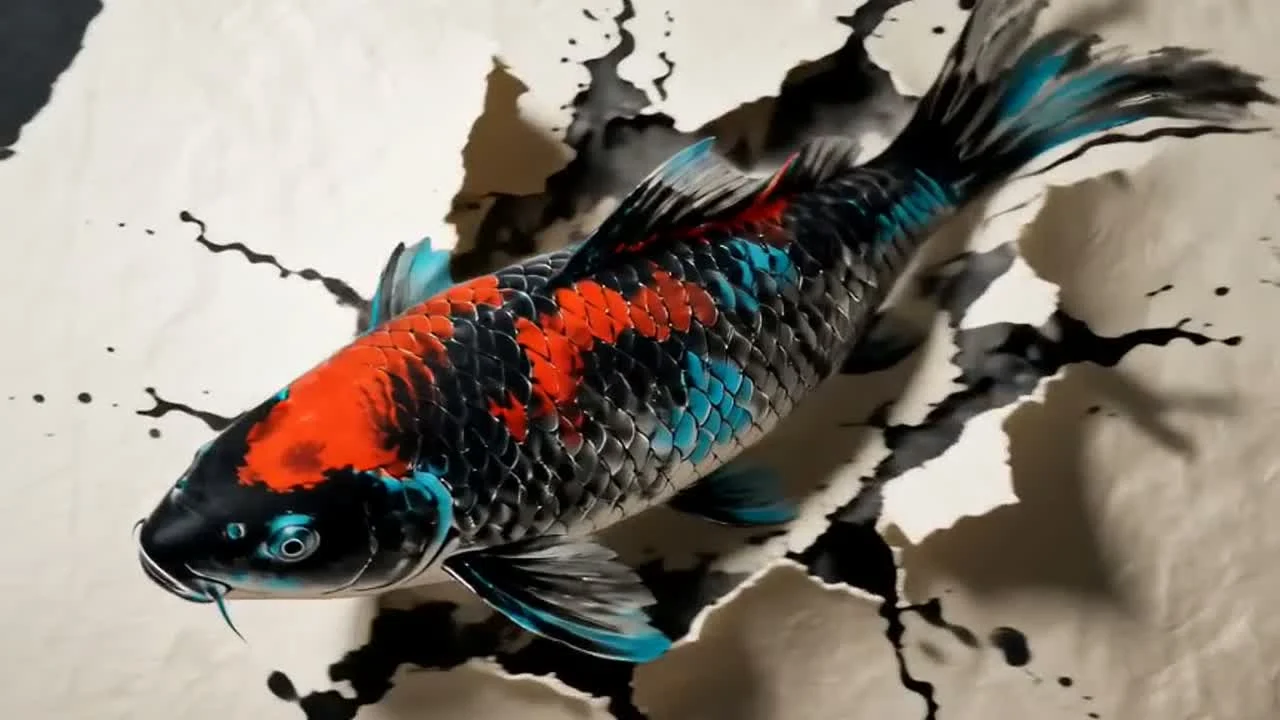
The verbs gave the model something to animate. "Magical, stunning, cinematic transformation" describes our reaction to a result; it does not describe movement. "Creases fold inward and harden into mirrored facets" does.
The source video used this prompt:
Use supplied image as exact opening frame. Hold only 0.4 seconds, then the painted koi snaps alive. Fast match-transformation trailer with hard splash cuts every 0.8-1.3 seconds: wet ink koi tears free from paper, becomes folded origami, then liquid chrome, translucent glass, and a living bioluminescent koi racing through a cosmic ocean. Camera plunges from macro to tracking, then whip-pans through ink, paper shards, water and light as natural occluders. No dissolves or lingering beauty shots. Preserve one koi, same silhouette, trajectory, screen direction and motion phase across transformations. Finish with the koi striking the paper and exploding back into one elegant ink image. No text/logos, extra fish, random morphing, broken fins, flicker or camera jumps.
Ink, paper shards, water, and light also act as occluders. They give one surface a moment to disappear before the next surface becomes readable. The model does not have to expose every imperfect intermediate frame.
Read the generated states one by one
Origami was the cleanest structural handoff. Triangular planes followed the body and fins, so the subject remained easy to recognize.
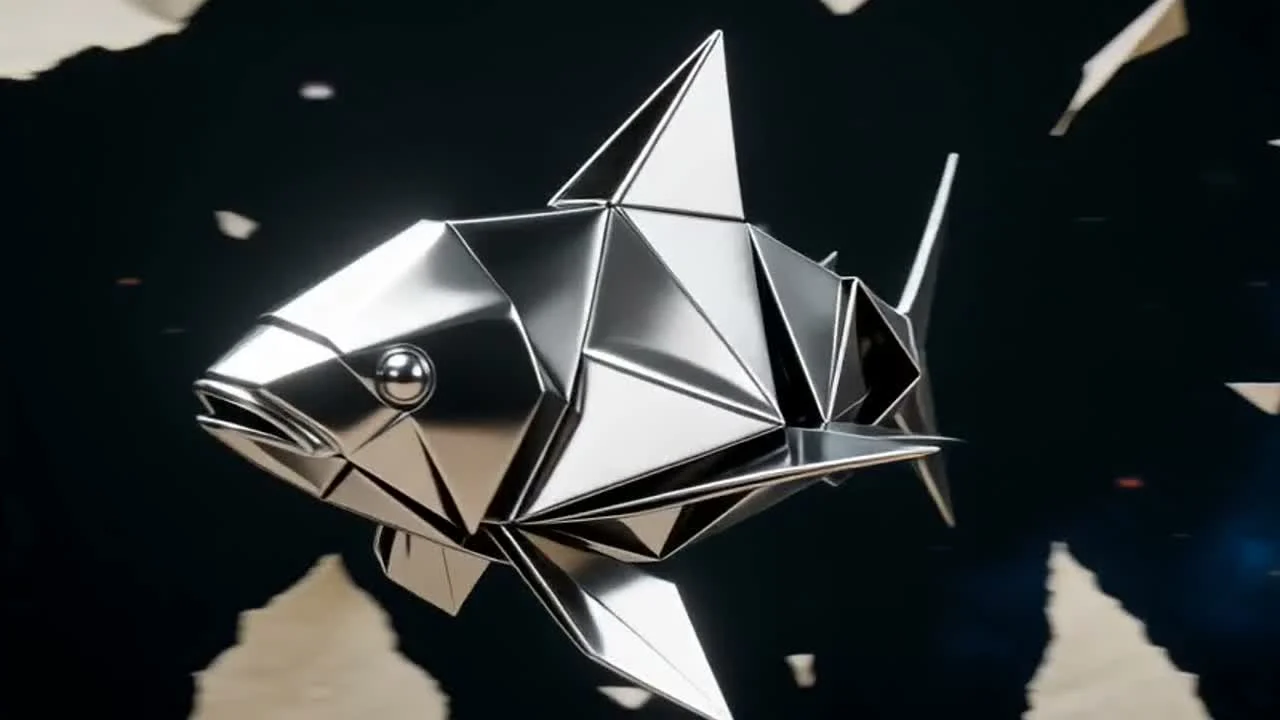
Glass caused more trouble. Transparency exposed an internal volume that the ink painting had never defined. The model enlarged the eyes and simplified some fins while inventing that volume.
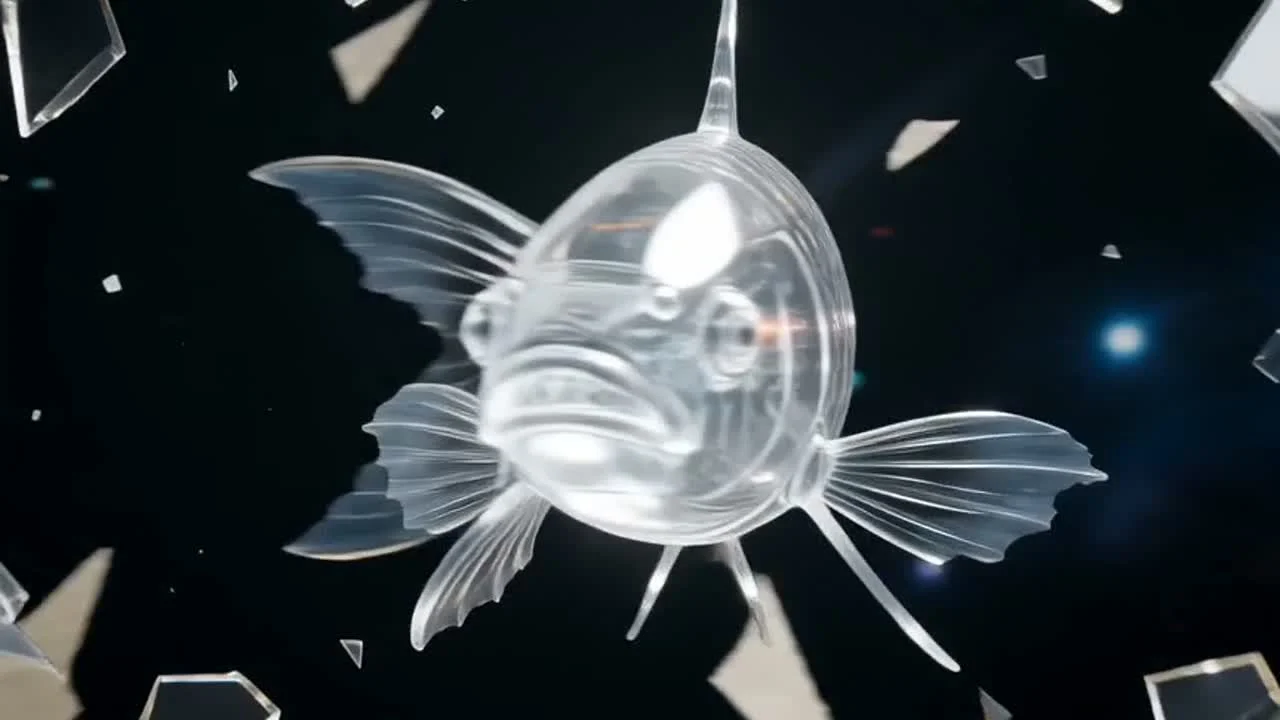
Chrome could hide uncertain anatomy inside reflection. Glass could not. We cannot tell from one generation whether a different prompt would solve this consistently, but the failure is a useful warning whenever a material reveals structure that the reference never showed.
The living stage recovered the cyan and vermilion accents as internal light. Those colors linked the volumetric fish back to the painting even though its environment and anatomy had changed.
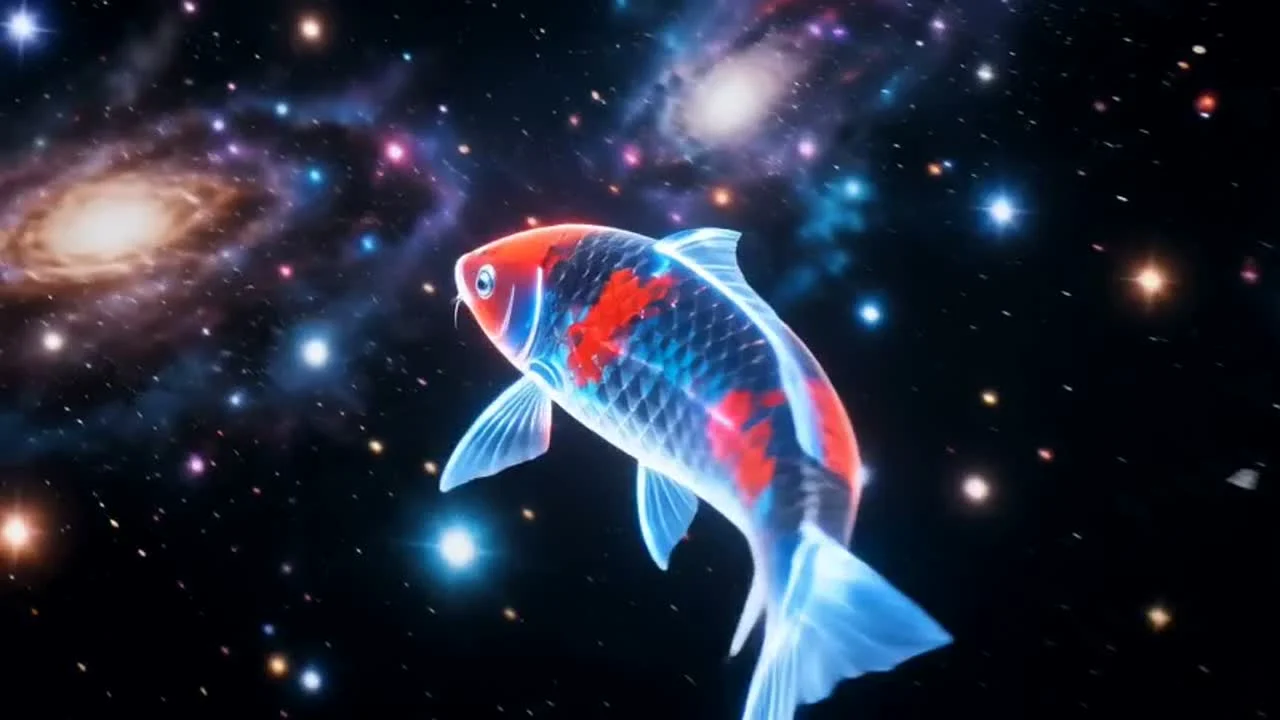
The final impact brought pigment and ivory paper back into view.
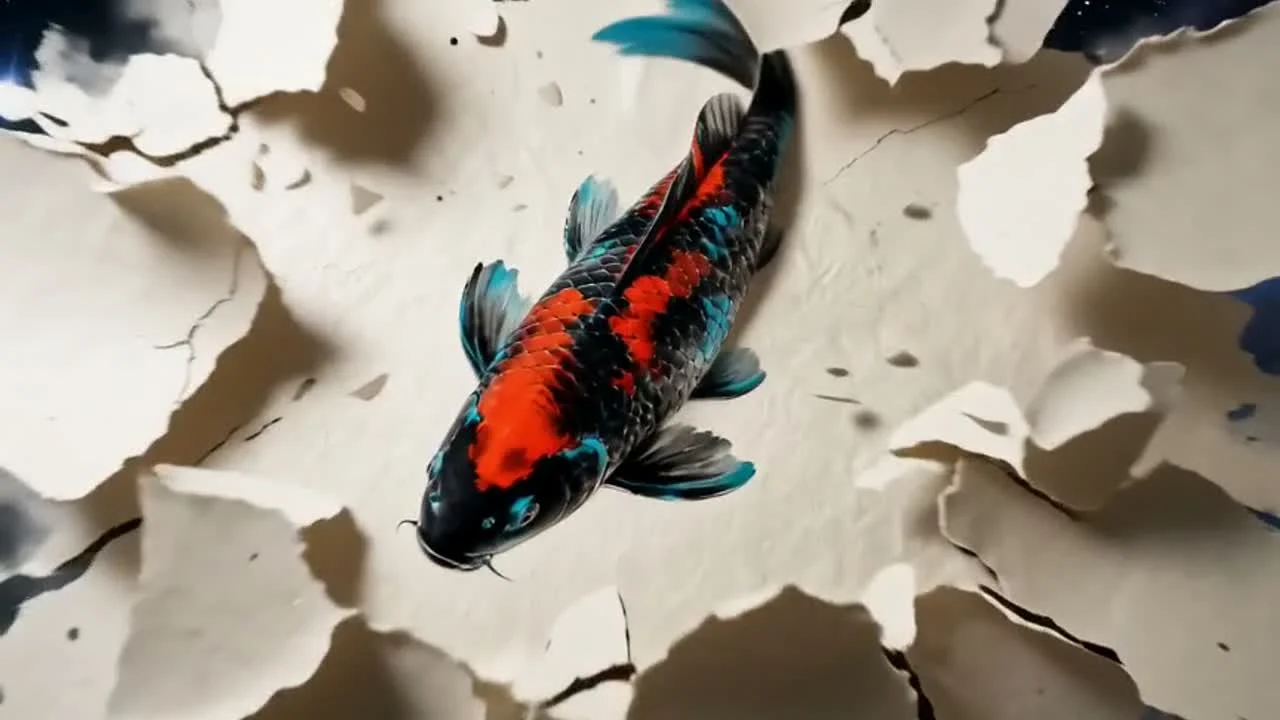
It looks like a return when played once. It would still jump if repeated as a loop because the framing, timing, and pixels do not match the opening closely enough.
What the test preserved
One primary koi remained on screen, moving head to tail in the same general direction. The curved silhouette, cyan and vermilion accents, and forward momentum survived most of the material changes. The video also returned to paper at the end.
Fin count, eye proportions, scale, and camera angle were less stable. The glass stage exposed the largest anatomical drift, while the cosmic section moved furthest from the original composition. That balance may be acceptable in a conceptual art clip. It would be risky for a branded mascot or scientific subject.
Plan a smaller material experiment
Start with a subject whose outline can survive a new surface: a butterfly, shoe, flower, mask, car, dress, sculpture, or musical instrument. Then place two materials next to each other only when you can describe the physical change between them.
charcoal drawing → torn paper → fabric → smoke → living bird
ice sculpture → clear glass → liquid water → cloud → snow sculpture
clay sneaker → polished ceramic → chrome → translucent gel → real footwear
For each arrow, complete one sentence:
The [current material] [physical verb] into [next material], while preserving [silhouette], [screen direction], and [motion phase]. Use [particles or occluder] to hide the material handoff without hiding the subject identity.
Five or six states increase the chance of drift. Faces, typography, fragile anatomy, and exact product shapes usually benefit from fewer changes. Separate stages can offer more control by passing the best frame forward; that approach becomes a controlled reference relay.
For a first attempt, choose two or three connected materials and write the verbs before the adjectives. You can compare image-to-video generators before selecting the model, then animate the strongest still in Motiofy. Review whether the intermediate material exposes information your source image never supplied.